Eight kilometers that changed history: how astronomers solved a 2,700-year-old mystery
Researchers from Nagoya University have confirmed an ancient solar eclipse record by refining the coordinates of the capital of the Lu state.
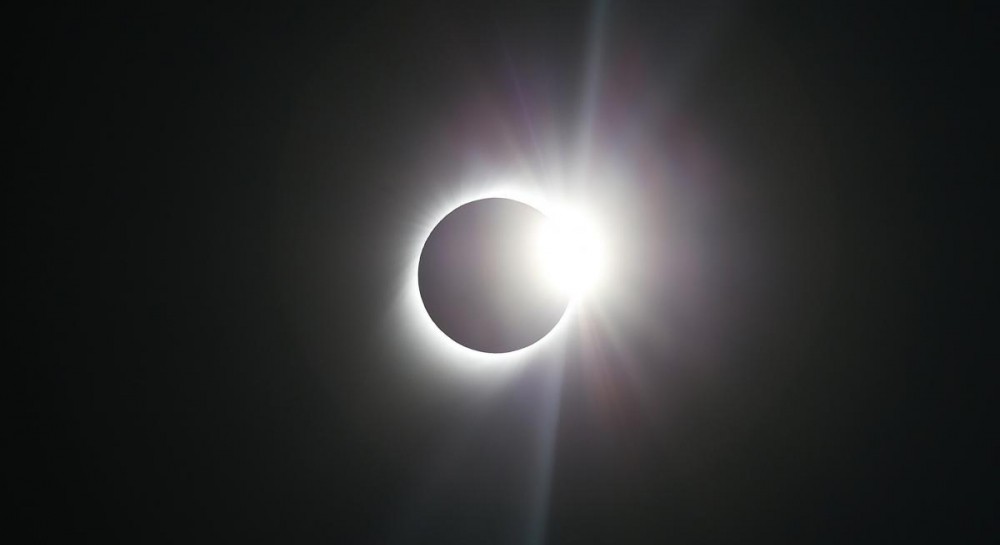 🎓Education
Photo: UNIAN
Key points
- Refined coordinates of the ancient city of Qufu
- Confirmed the authenticity of the 709 BC solar eclipse record
- Research aids in modeling Earth's rotational deceleration
Scientists from Nagoya University have made a breakthrough in the study of ancient astronomical chronicles. By analyzing records of a total solar eclipse that occurred on July 17, 709 BC, researchers discovered a discrepancy in previous calculations that had hindered the verification of Chinese annals.
Location accuracy as the key to the truth
Historical sources describe how in the capital of the Lu state, the city of Qufu, the Sun went completely dark, and a yellowish glow appeared around it. Modern scientists suggest this is one of the first descriptions of the solar corona. However, for a long time, astronomical models indicated that a total eclipse could not have been observed in Qufu.
The solution to the mystery came from verifying archaeological data. It turned out that the true capital of the Lu state was located 8 kilometers away from the site previously considered the observation point. This small distance proved decisive: it was from that location that astronomers of the time could have witnessed the full phase of the eclipse and the solar corona.
This work demonstrates how even a minimal error in coordinates can call into question historical evidence that has been preserved for millennia.
Beyond its historical value, this research helps scientists better understand the dynamics of Earth's rotation. By using data on ancient eclipses, experts are refining mathematical models of the planet's deceleration, which allows for more accurate predictions of celestial phenomena in both the past and the future.
Source UNIAN — unian.ua/science/lishe-8-kilometriv-viddilyali-vchenih-vid-rozgadki… ↗
Read next
 🩺Health
Healthcare Infrastructure Recovery in Chernihiv Region: Over Half of Facilities Restored
In the Chernihiv region, 54% of healthcare and social facilities damaged by Russian shelling have been restored.
 💡Tech
What to do if your smartphone gets wet: 4 common mistakes
Experts explain why popular methods of drying a smartphone can permanently damage the device and how to act correctly in a critical situation.
 💡Tech
EU to Allocate 1 Billion Euros for Arms Procurement for Ukraine
The Council of the EU has approved additional funding to strengthen Ukraine's defense capabilities through the European Peace Facility.
 🧠AI Analysis
EU spent more on Russian energy than on aid to Ukraine, Commission data shows
According to the European Commission, EU member states have spent more on Russian energy imports than they have provided in financial support to Ukraine since 2022.
 🛡️Security
Russian attack on Zaporizhzhia: kindergarten and residential building damaged
A Russian strike on Zaporizhzhia has damaged civilian infrastructure, including a kindergarten and a nearby apartment building.
 🇺🇦Ukraine
Ukraine blocks Russian climate report at COP31 over attempts to legitimize occupation
The Ukrainian delegation at the COP31 climate conference in Antalya successfully blocked a Russian report containing data from temporarily occupied Ukrainian territories.