Scientists Debunk 80-Year Myth of Bat Blindness
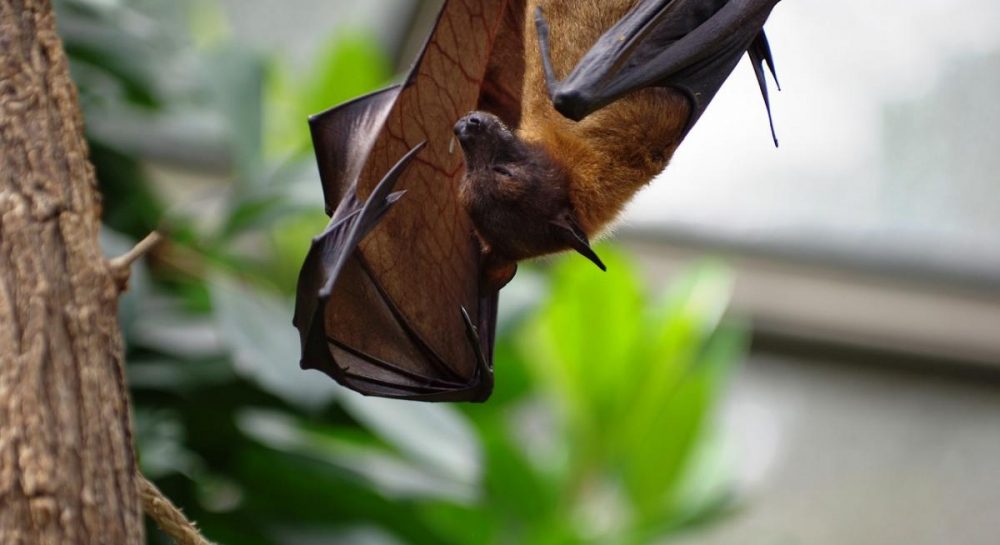
New research reveals that bats rely on sophisticated vision and eye movements to hunt and navigate, especially during twilight hours.
 💡Tech
Photo: UNIAN
Key points
- Bats use eye movements to stabilize vision during high-speed maneuvers
- Hunting efficiency increases by 50% when visual data supplements echolocation
- Flight speed increases significantly in twilight compared to total darkness
For over 80 years, both the scientific community and the general public operated under the assumption that bats were effectively blind, relying solely on echolocation to navigate the world. However, groundbreaking research recently published in Current Biology and Proceedings of the National Academy of Sciences has finally debunked this long-standing myth. Scientists have demonstrated that vision plays a far more critical role in the lives of these nocturnal mammals than previously imagined.
Precision Through Visual Stability
A study conducted by Johns Hopkins University revealed that bats actively move their eyes to stabilize their visual field while in flight. By tracking these movements, researchers found that bats possess specific ocular reflexes that allow them to follow moving objects with precision. Interestingly, these reflexes are most active during complex aerial maneuvers, suggesting that their visual system is highly specialized for acrobatic flight rather than static observation.
This visual tracking is closely linked to the otolith organs in the inner ear, which govern balance and the perception of gravity. When a bat performs a sharp turn or a sudden dive, these organs trigger eye movements that keep the animal's vision steady. This sophisticated integration of sensory inputs explains how bats can navigate through dense forests or the intricate corridors of historic buildings with such remarkable agility.
Optimized Hunting in the Twilight
Further research from Aarhus University has shed light on how light levels dictate bat behavior. The study found that when ambient light is available—specifically during the twilight hours—bats significantly alter their hunting strategy. They reduce their reliance on echolocation by half, instead increasing the volume of their acoustic calls and boosting their flight speed. Data showed that hunting speeds jumped from 18.7 km/h in total darkness to 28.4 km/h in lit conditions.
"This means that bats reduce acoustic tracking of prey when they receive enough light as additional sensory information," explained researcher Laura Stidsholt.
According to the findings, bats utilize visual information as a supplementary sensory stream, allowing them to capture prey up to 50% faster than they would using sound alone. Beyond their navigational prowess, bats continue to fascinate scientists due to their longevity—living up to 40 years—and their unique immune systems. This new understanding of bat vision emphasizes the need for better conservation strategies in urban environments where these sighted hunters play a vital ecological role.
Source UNIAN — unian.ua/curiosities/kazhani-dobre-bachat-i-vikoristovuyut-zir-pid-… ↗
Read next
 🛡️Security
Capital of Ukraine Hit by Ballistic Missiles Twice Overnight: Destructions Reported
Russian forces launched a second ballistic missile attack on Kyiv overnight, causing explosions and infrastructural damage.
 🛡️Security
Ukraine to receive legally binding security guarantees after ceasefire
Leaders from Germany, France, the UK, and Ukraine have agreed on a framework for post-ceasefire security guarantees and significant long-term financial support.
 🛡️Security
Zelenskyy in Berlin: NATO and EU Remain Key Security Guarantees for Ukraine
During the 'Coalition of the Willing' meeting in Berlin, President Volodymyr Zelenskyy emphasized that NATO membership and EU integration are fundamental to Ukraine's sec…
 🛡️Security
Ukraine to Receive €90 Billion from EU and New Security Guarantees: Berlin Summit Results
Western leaders and Ukraine have agreed on a massive financial aid package and discussed security mechanisms for the post-conflict period.
 🛡️Security
Situation in occupied Crimea: panic buying around the Kerch Bridge
Following a series of attacks on the Kerch Bridge, residents of Simferopol are rushing to stock up on fuel and essential food items.
 🚌Transport
The road sign with a crossed-out finger: what it really means
We explain the meaning of the rare R9-4 road sign, which prohibits hitchhiking on certain road sections.